How Clocks Measure Time Across Centuries

In 1656, the Dutch scientist Christiaan Huygens built the first pendulum clock, a device so revolutionary that it doubled the accuracy of timekeeping overnight. Before this invention, people relied on sundials, hourglasses, and water clocks, tools so crude they might lose or gain several minutes every day. Huygens's pendulum swung at exactly the same rate every time, creating a natural rhythm that could be translated into precise hours and minutes. This simple idea, that a swinging weight could keep time better than anything humans had created before, launched the modern age of horology, the science of measuring time. Today, we carry atomic clocks powerful enough to define the second itself, yet Huygens's principle still works in grandfather clocks in living rooms around the world.
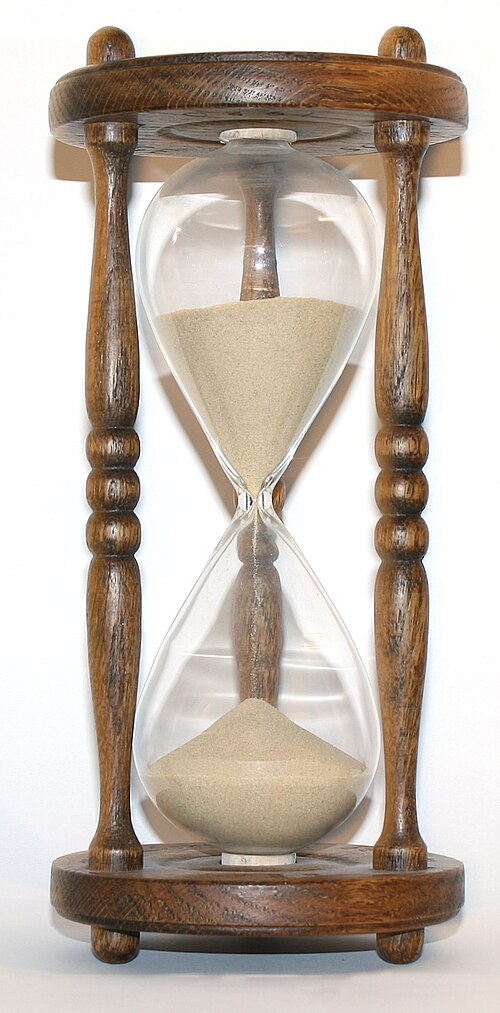
Clocks emerged from a basic human need: to measure stretches of time smaller than a day or a month. For most of history, the sun and moon were enough. A sundial traced the sun's shadow across a flat surface to show what hour it was, working perfectly on clear days but failing when clouds rolled in. Water clocks, devices that measured time by the steady drip of water from one chamber to another, represented an advance because they worked at night and indoors. Hourglasses, with their falling sand, were portable and practical. These tools had real limits, though. A water clock might freeze in winter; an hourglass required someone to flip it over. None of them kept precise time, and none could chime to announce the hour. The invention of the verge escapement around 1300 in Europe changed everything. This mechanism allowed a weighted pendulum or balance wheel to regulate the movement of gears, making the first mechanical clocks possible.

The breakthrough of spring-driven clocks during the 15th century meant that clocks no longer needed heavy weights hanging from them. Suddenly, timepieces could be smaller, more portable, and placed anywhere in a building. During the 15th and 16th centuries, clockmaking became a respected craft, with cities competing to build the most elaborate town clocks. Then came Huygens in 1656 with his pendulum clock, which improved accuracy so dramatically that ship captains and astronomers became desperate to own one. Why? Because knowing the precise time was essential for navigation at sea. Sailors needed to calculate their longitude, how far east or west they had traveled, and that required comparing local time with the time at their port of origin. Every second of error meant miles off course. This pressure to improve timekeeping drove centuries of innovation.
At the heart of every modern clock is a harmonic oscillator: an object that vibrates or oscillates at a particular, repeating frequency. A pendulum swinging back and forth is a harmonic oscillator. So is a balance wheel in a watch, vibrating hundreds of times per second. A tuning fork, struck to produce a musical note, oscillates at a precise pitch. A quartz crystal, used in digital watches, vibrates millions of times per second when electricity passes through it. The most precise harmonic oscillator of all is the vibration of electrons in atoms as they emit microwaves. These atomic oscillations are so reliable that scientists use them to formally define the second itself. The faster and more consistent an oscillator vibrates, the more accurate the clock. This principle connects the water clocks of ancient Egypt to the atomic clocks that synchronize GPS satellites overhead.

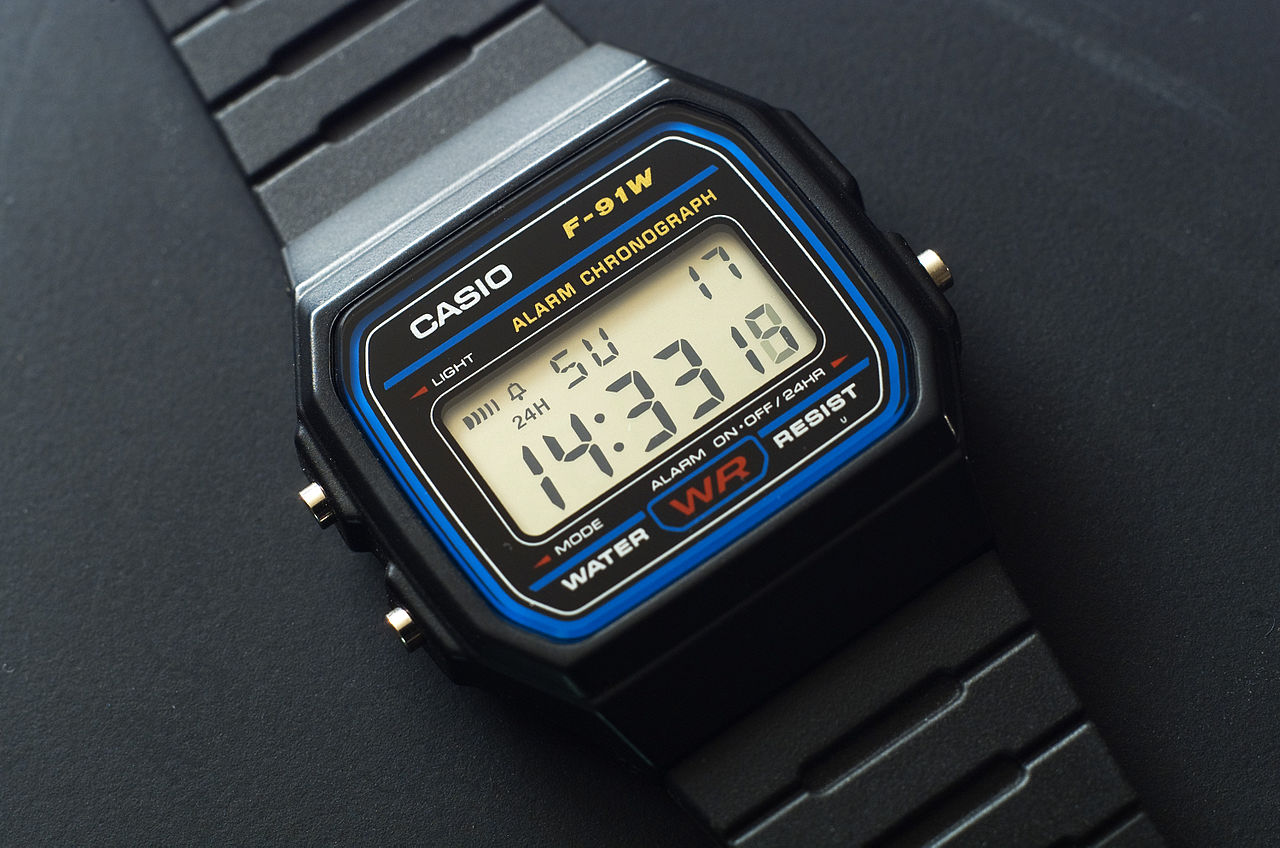
Clocks display time in different ways depending on who uses them and where. Analog clocks, the traditional kind with a face and moving hands, remain common because humans instinctively understand their design: the hour hand crawls slowly around while the minute hand sweeps faster. Digital clocks show time as numbers, using either 12-hour notation (with AM and PM) or 24-hour military time. Most digital clocks today use electronic mechanisms driving LCD, LED, or VFD displays that consume very little power. For people who are blind, speaking clocks announce the time aloud in spoken words, while other specialized clocks have tactile displays that can be read by touch. From the sundial to the smartphone, clocks have always adapted to serve the people who need them.