Mary Celeste: Ship of Mysteries
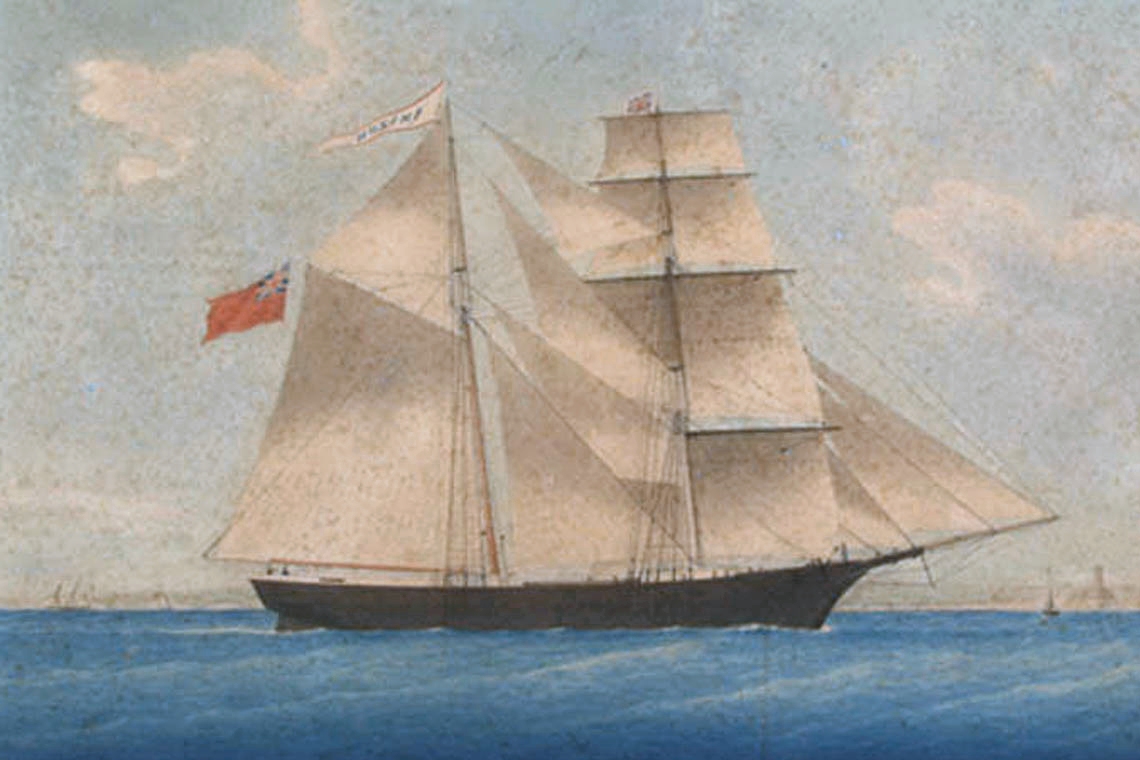
On December 4, 1872, the crew of the merchant ship Dei Gratia spotted something eerie drifting in the Atlantic Ocean near the Azores: the brigantine Mary Celeste, bobbing under partial sail with not a single person on deck. When the crew boarded to investigate, they found the ship in surprisingly good condition, still stocked with provisions and carrying its full cargo of alcohol. The captain's personal belongings sat undisturbed in his cabin, and the ship's log showed its last entry dated ten days earlier, on November 24. But there was no sign of the captain, his family, the crew, or the ship's lifeboat. It was as if everyone aboard had simply vanished into thin air, leaving behind one of history's greatest maritime puzzles.

Mary Celeste had an ordinary beginning. Built in Spencer's Island, Nova Scotia, she was launched in 1861 under the British name Amazon and sailed without incident for years. In 1868, she was sold to American owners, renamed Mary Celeste, and continued her routine work as a merchant vessel. On November 7, 1872, she left New York City bound for Genoa, Italy, carrying a cargo of denatured alcohol worth about 9,000 dollars. Captain Benjamin Spooner Briggs commanded the ship, and he had brought his wife Sarah and their two-year-old daughter Sophia along on the voyage. The crew numbered seven men. Everything seemed normal as the ship sailed eastward across the Atlantic.

When the Dei Gratia's crew salvaged the Mary Celeste, they discovered clues that raised more questions than answers. The ship was seaworthy and under control, suggesting no violent storm or disaster had struck. The crew's clothes and belongings remained in their bunks. A sewing basket sat in the captain's cabin as if Sarah had just set it down. The cargo of alcohol was completely untouched and secure. Most puzzling of all, the ship's lifeboat was gone, yet there were no signs of panic, struggle, or abandonment. The crew members of the Dei Gratia, who would later claim salvage rights, reported that everything seemed frozen in time.

At the salvage hearings in Gibraltar in 1873, officials examined wild theories: perhaps the crew had mutinied against Captain Briggs, or maybe the Dei Gratia's own crew had attacked Mary Celeste to claim salvage money. Insurance fraud was suspected. But the investigating officers found no convincing evidence to support any of these ideas. The hearings ended inconclusively, and the court awarded only a modest salvage payment to the Dei Gratia's crew, less than they expected. This frustration would fuel decades of speculation.

What actually happened to the nine people aboard Mary Celeste remains unsolved to this day, but the mystery grew far beyond the facts. Writers invented elaborate explanations: alcohol vapors had poisoned the crew, giant squids had attacked the ship, underwater earthquakes had terrified everyone into abandoning a perfectly safe vessel. In 1884, author Arthur Conan Doyle, creator of Sherlock Holmes, published a fictional short story called "J. Habakuk Jephson's Statement" based loosely on the incident, which was so popular that it permanently changed the ship's name in public memory to "Marie Celeste." Books, plays, and films have retold the story countless times, each adding new dramatic twists. In 1885, the real Mary Celeste met a sad end when her captain deliberately wrecked her off Haiti to commit insurance fraud, a mundane fate for a ship that had become synonymous with the unexplained.